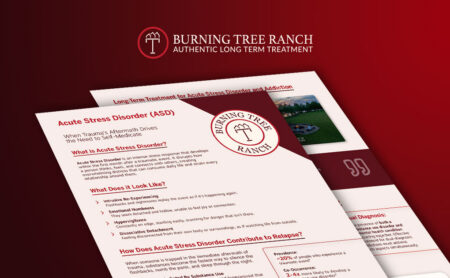

What is Acute Stress Disorder?
Acute Stress Disorder is an intense stress response that develops within the first month after a traumatic event. It disrupts how a person thinks, feels, and connects with others, creating overwhelming distress that can consume daily life and strain every relationship around them.
What Does It Look Like?
-
Intrusive Re-Experiencing
Flashbacks and nightmares replay the event as if it's happening again. -
Emotional Numbness
They seem detached and hollow, unable to feel joy or connection. -
Hypervigilance
Constantly on edge, startling easily, scanning for danger that isn't there. -
Dissociative Detachment
Feeling disconnected from their own body or surroundings, as if watching life from outside.
How Does Acute Stress Disorder Contribute to Relapse?
When someone is trapped in the immediate aftermath of trauma, substances become the fastest way to silence the flashbacks, numb the panic, and sleep through the night.
- Distress Mediated By Substance Use
Substances quiet intrusive memories and hyperarousal that disrupt normal function. - Short-Term Programs Miss the Window
ASD requires early, sustained intervention. A 30-day program barely addresses the surface before discharge. - Without Treatment, ASD Becomes Chronic
ASD cases can progress to PTSD, deepening both the trauma response and substance dependence.
Dual Diagnosis Stats:
Prevalence: ~20% of people who experience a traumatic event¹
Co-Occurrence: 2-4x more likely to develop a substance use disorder²
Progression Risk: ~50% of ASD cases progress to PTSD if untreated³
Long-Term Treatment for Acute Stress Disorder and Addiction
Acute stress disorder creates a narrow but critical window. Without sustained intervention, the trauma response hardens into PTSD, and substance use becomes the default coping strategy. A short-term program sends someone home before the full impact of the trauma has even surfaced.
Our long-term, progress-based model provides the time and clinical depth to process trauma while building real coping skills. Clients advance when they demonstrate genuine change in how they respond to stress.

“Acute stress disorder is the brain's alarm system stuck in the on position. Substances turn it off temporarily, but the alarm gets louder every time. We have to address the trauma itself, and that takes more time than any short-term program allows.”
Meghan Bohlman, LPC-S, LCDC, EMDR-Trained
Executive Clinical Director, Burning Tree Ranch
Dual Diagnosis Treatment for Acute Stress Disorder
When acute stress disorder goes untreated alongside addiction, substances become a way to manage panic, flashbacks, and numbness. Without addressing both conditions, the trauma response deepens and relapse follows.
-
Treating Both Conditions Together
Unresolved trauma sustains the cycle of substance use. -
Processing Trauma Over Time
Real recovery requires working through the event, not just past it. -
Providing Enough Time for Stabilization
Lasting change demands safety, structure, and sustained support.
Dual Diagnosis:
The presence of both a substance use disorder and a mental health condition occurring together. Effective treatment for dual-diagnosis addictions must address both aspects simultaneously.