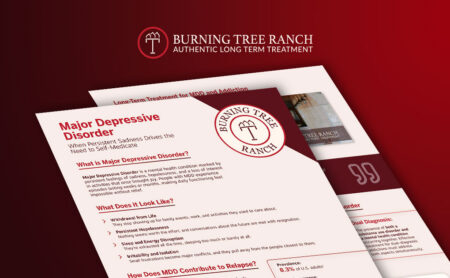

What is Major Depressive Disorder?
Major Depressive Disorder is a mental health condition marked by persistent feelings of sadness, hopelessness, and a loss of interest in activities that once brought joy. People with MDD experience episodes lasting weeks or months, making daily functioning feel impossible without relief.
What Does It Look Like?
-
Withdrawal from Life
They stop showing up for family events, work, and activities they used to care about. -
Persistent Hopelessness
Nothing seems worth the effort, and conversations about the future are met with resignation. -
Sleep and Energy Disruption
They're exhausted all the time, sleeping too much or barely at all. -
Irritability and Isolation
Small frustrations become major conflicts, and they pull away from the people closest to them.
How Does MDD Contribute to Relapse?
For someone with MDD, the weight of daily life feels crushing. Substances offer the only quick escape from the relentless pain of feeling nothing at all.
- Substances Provide Quick Relief
When joy is absent and existence feels like a burden, substances provide temporary numbness. - Short-Term Programs Can’t Address the Depth
A 30-day program can’t resolve years of depression patterns and learned coping behaviors. - Without Treating MDD, the Despair Remains
They leave treatment and return to the same darkness that drove them to use in the first place.
Dual Diagnosis Stats:
Prevalence: 8.3% of U.S. adults¹
Co-Occurrence: 25% develop a substance use disorder in their lifetime²
Relapse Risk: 2x more likely to have SUDs than those without depression³
Long-Term Treatment for MDD and Addiction
MDD creates a fundamental barrier to recovery: motivation. Someone who cannot see a future worth living for lacks the drive to sustain sobriety through difficult moments. They need extended time to rebuild a sense of purpose while developing new coping strategies.
Our long-term, progress-based model provides the consistent structure that MDD demands. Clients advance through the program when they demonstrate genuine changes in how they engage with life and manage their emotional states.

“The emptiness they feel is real. Substances fill that void temporarily. Real treatment means helping them build a life that feels worth protecting.”
Meghan Bohlman, LPC-S, LCDC, EMDR-Trained
Executive Clinical Director, Burning Tree Ranch
Dual Diagnosis Treatment for MDD Co-Occurring with Addiction
When MDD and addiction occur together, treating only one leads to relapse. Depression drains the motivation needed for recovery, and substance use deepens the hopelessness that characterizes depression.
Treating Both Conditions Together Without treating MDD, the emotional drivers of substance use remain.
Rebuilding a Sense of Purpose Treatment must help them rediscover meaning and purpose in life.
Providing Enough Time Depression patterns develop over years. Changing them takes more than a few weeks.
-
Treating Both Conditions Together
Without treating the underlying disorder, the change is temporary. -
Building Life Skills
Practical skills are required to manage emotions without substance use. -
Providing Enough Time
It takes time to replace deeply-ingrained patterns with new ones.
Dual Diagnosis:
The presence of both a substance use disorder and a mental health condition occurring together. Effective treatment for dual-diagnosis addictions must address both aspects simultaneously.